
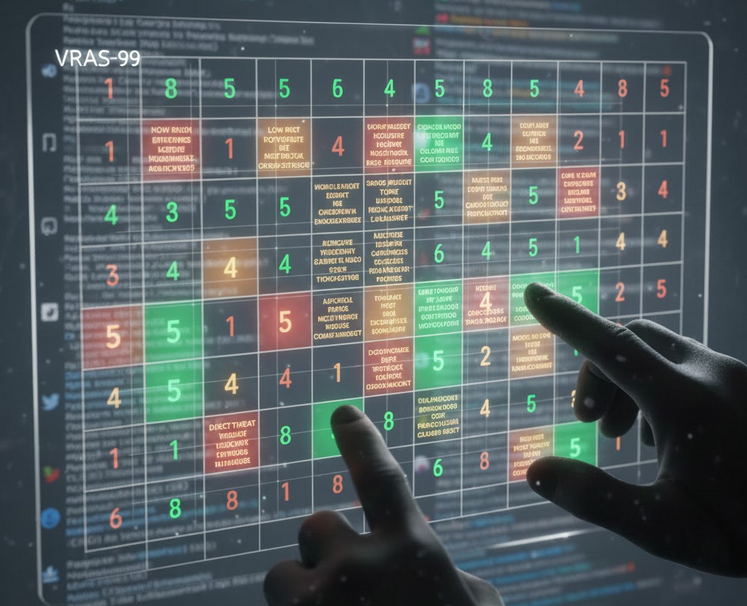
Structured Threat Communication Analysis Training
A structured analytical framework for the professional assessment of written communications associated with fixation, grievance, and escalation. Designed for law enforcement, protective intelligence, corrections, and institutional use.
What is VRAS-99
VRAS-99 (Visual Risk Analysis System) is a structured training and analytical framework designed to support the assessment of written communications within professional and institutional contexts.
The system provides a disciplined method for examining language, structure, and indicators within written material, supporting informed analytical judgement without replacing professional decision-making.
VRAS-99 is used for training and capability development in environments where written communications may present indicators of concern, escalation, fixation, or intent. It is designed for professional use within law enforcement, corrections, intelligence, and related security or risk-management functions.
The framework emphasises structured reasoning, consistency of analysis, and documented methodology rather than automated or predictive outputs.
VRAS-99 is a training and analytical framework — not an investigative or decision-making system.
The VRASS-99 Certification Structure
Foundational certification introducing the VRAS-99 Method and the structured analysis of written threat communications using defined indicators and visual assessment techniques.
Focused analytical certifications applying the VRAS-99 Method to specific threat-communication contexts requiring deeper domain-specific assessment.
For Agencies
VRAS-99 is designed to support organisations requiring structured, defensible approaches to the analysis of written communications within regulated environments.
The framework may be integrated into professional development, internal training, or specialist analytical programmes, subject to governance and suitability considerations.
Agencies seeking structured analytical training, certification pathways, or controlled access options can explore tailored engagement models aligned to organisational requirements.
Access is reviewed to ensure appropriate professional and governance alignment.